Omaha Nebraska Overview
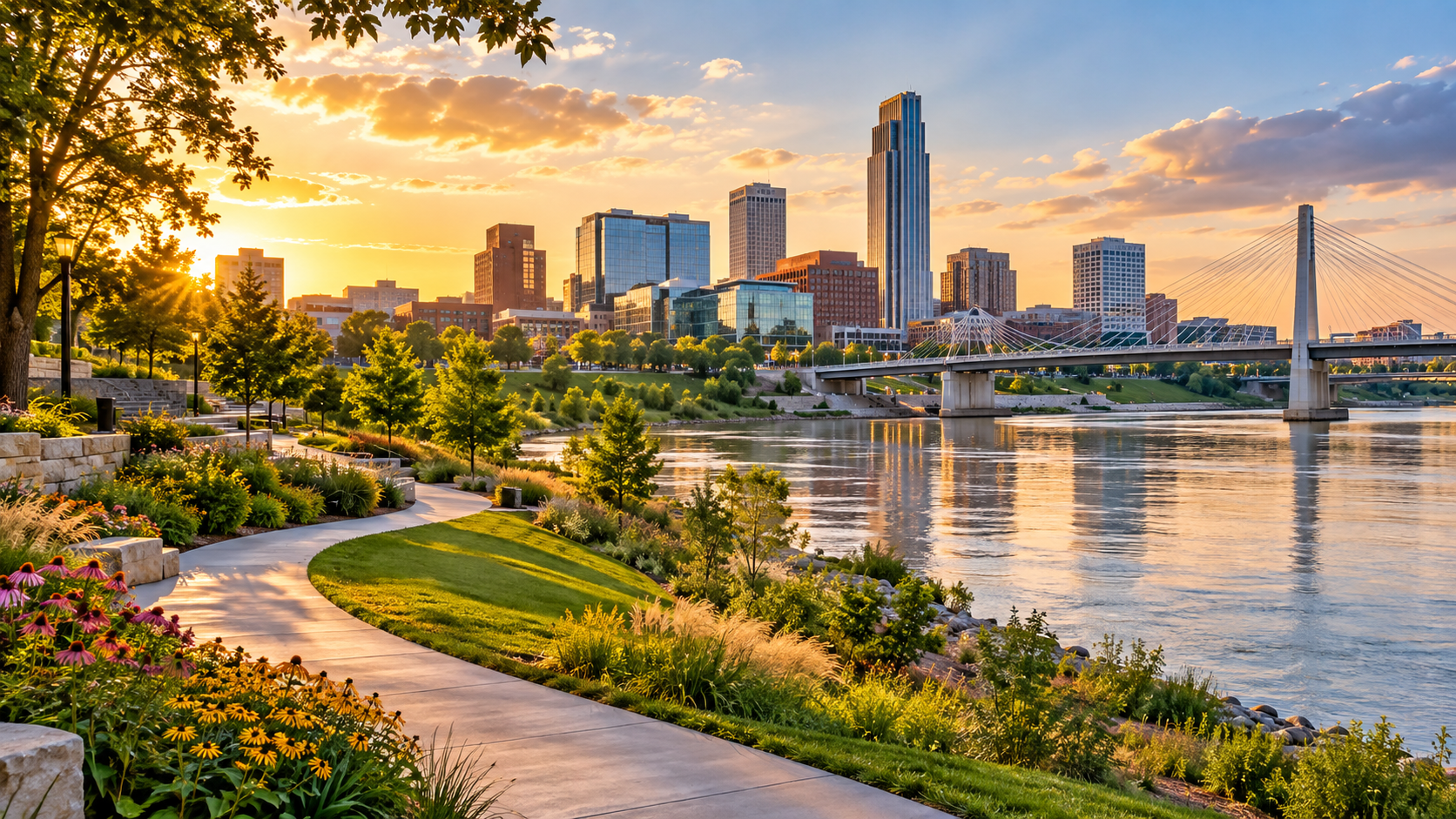
Omaha sits along the Missouri River in eastern Nebraska, directly across from Iowa. Meanwhile, downtown connects the Old Market with Omaha’s redeveloped riverfront. The RiverFront now combines three downtown parks across 72 acres.
Neighborhoods offer noticeably different lifestyles. Additionally, areas such as Dundee, Benson, Aksarben, and downtown provide varied housing and entertainment choices.
Why Choose Omaha?
Omaha provides big-city services while remaining manageable for everyday travel. Additionally, residents have access to major healthcare, universities, entertainment, sports, and outdoor spaces.
The city also supports an active cultural calendar. Therefore, newcomers can find activities throughout every season.
Cost of Living
Household expenses vary by neighborhood, housing type, transportation, utilities, and insurance. Therefore, newcomers should compare total monthly costs before choosing an area.
Commute patterns can also affect expenses. Meanwhile, neighborhoods near employment centers or transit may reduce regular driving.
Real Estate and Housing Market
Omaha offers historic homes, suburban neighborhoods, apartments, townhomes, and newer developments. Additionally, housing styles change considerably from central Omaha to western neighborhoods.
Older areas often provide mature trees and traditional architecture. In contrast, western Omaha includes many newer residential communities.
Education
Omaha Public Schools serves families throughout much of the city. New students can enroll online for the 2026–2027 school year.
However, school assignments depend on individual addresses. Therefore, families should confirm attendance options before choosing a home.
Healthcare Facilities
Nebraska Medicine provides major hospital and specialty services in Omaha. Nebraska Medical Center offers emergency, inpatient, and outpatient care around the clock.
Additionally, Nebraska Medicine operates numerous clinics across the metropolitan area. Other healthcare systems further expand local options.
Recreation and Leisure
The RiverFront combines Gene Leahy Mall, Heartland of America Park, and Lewis & Clark Landing. Together, the parks provide 72 acres of downtown recreation and gathering space.
Additionally, Omaha has a long-established park and boulevard system. Trails, community parks, recreation facilities, and green spaces extend throughout the city.
Dining and Shopping
Omaha’s Old Market is a major destination for restaurants, local shops, entertainment, and historic surroundings. Meanwhile, other districts provide their own dining and nightlife scenes.
Aksarben, Benson, and other commercial areas expand local choices. Therefore, residents do not need to rely on downtown for everyday entertainment.
Events and Festivals
Omaha hosts major events throughout the year. For example, summer brings the NCAA Men’s College World Series, Taste of Omaha, and outdoor festivals.
Spring includes Cinco de Mayo celebrations and other community events. Meanwhile, fall and winter bring Oktoberfest, holiday activities, and seasonal festivals.
Transportation and Accessibility
Metro Transit operates local bus service across more than 100 square miles. Additionally, ORBT provides rapid bus service between downtown and Westroads along Dodge Street.
Eppley Airfield sits about four miles from downtown. The airport served more than 5.2 million passengers in 2025 and offers numerous nonstop destinations.
Conclusion
Omaha combines diverse neighborhoods, healthcare, schools, recreation, dining, events, and regional transportation. Overall, the city provides several lifestyles for newcomers considering eastern Nebraska.