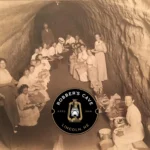
Learn about the fascinating history of Lincoln Nebraska, from its early days to its development into a vibrant community.
Long before the city of Lincoln took shape, the land was home to Native American tribes including the Omaha, Otoe, Pawnee, and Ponca peoples. These tribes lived along Nebraska’s rivers and plains, depending on the land for hunting, farming, and trade.
The area that would become Lincoln was known for its fertile soil and natural beauty. Tallgrass prairies, winding creeks, and open skies stretched for miles. Early explorers and traders passing through the region noted the land’s potential — though few could have imagined the thriving community that would one day grow here.
As the United States expanded westward in the early 19th century, the area became part of the Louisiana Purchase in 1803. In the years that followed, settlers began moving into eastern Nebraska, drawn by opportunity, farmland, and the promise of a new beginning.
Before Lincoln was Lincoln, there was Lancaster Village — a tiny frontier settlement founded in 1856 near Salt Creek. The area was named after the rich salt deposits found in nearby marshlands, which were an important natural resource in the 1800s.
Pioneers were drawn to the region by the salt trade, but life was anything but easy. The settlement was isolated, weather was unpredictable, and transportation was limited to wagon trails. Still, Lancaster slowly grew as settlers built homes, farms, and trading posts.
At the time, Nebraska was still a territory, and Lancaster was just one of many small frontier villages scattered across the plains. Few could have predicted that this humble settlement would one day become the capital of the state.
In 1867, Nebraska officially became the 37th state to join the Union. The original capital was in Omaha, but many state leaders wanted to move it closer to the center of the new state’s population.
Governor David Butler, along with a team of commissioners, set out to choose a new capital site. They sought a location that was more accessible to settlers in southern Nebraska — and after much debate, they chose the small village of Lancaster.
When the decision was made to move the state capital to Lancaster, not everyone was pleased — especially residents of Omaha, who feared losing influence.
To make the move less popular among Omaha’s supporters, Lancaster was renamed Lincoln, in honor of President Abraham Lincoln, who had been assassinated just two years earlier. At the time, some Nebraskans still held Confederate sympathies, so naming the capital after Lincoln was a political statement as much as a tribute.
Despite the controversy, the decision stood. Lancaster officially became Lincoln, Nebraska, and in 1869, construction began on the first Nebraska State Capitol building. The move marked the beginning of a new era for the fledgling community.
Once Lincoln was named the state capital, it quickly began to transform. What was once a dusty frontier town started attracting new residents, businesses, and government offices.
The first Nebraska State Capitol was a modest two-story structure built with local limestone. It became the center of the growing city — not just politically, but socially and economically.
By the 1870s, Lincoln was becoming a hub for commerce and trade. The arrival of the railroad in 1870 connected the city to Omaha, Chicago, and beyond, allowing goods and people to move with ease. This connection to national markets sparked rapid growth and put Lincoln on the map as a major Midwestern city.
One of the most significant moments in Lincoln’s history came in 1869 with the establishment of the University of Nebraska–Lincoln (UNL).
The state’s new leaders wanted a university that would educate future generations and serve as a center for research, innovation, and progress. The University of Nebraska opened its doors in 1871, beginning with just one building — University Hall — and a small group of students.
Over time, the university became one of Lincoln’s defining features. It not only shaped the city’s culture and economy but also gave Lincoln a youthful, energetic spirit that continues today.
By the late 1800s, Lincoln was thriving. The population grew from a few hundred residents to tens of thousands within a few decades.
New industries emerged, including manufacturing, agriculture, and retail. Brick buildings began replacing wooden ones, streets were paved, and electric lights and trolleys appeared. The skyline started to rise with new churches, schools, and businesses.
Downtown Lincoln became the commercial heart of the region. Stores lined O Street, the main thoroughfare, and visitors from nearby towns came to shop, work, and socialize.
Lincoln’s rapid development earned it the nickname “The Star City,” symbolizing its bright future and importance to Nebraska.
While Lincoln’s first two capitol buildings were functional, neither stood the test of time. By the early 1900s, it was clear that the state needed a more impressive and durable structure.
In 1922, construction began on the current Nebraska State Capitol, designed by renowned architect Bertram Goodhue. Completed in 1932, it remains one of the most iconic landmarks in the state — and one of the most beautiful capitol buildings in the nation.
The design combined classical and modern architecture, featuring a striking 400-foot limestone tower topped with the statue known as “The Sower.” The building’s art, mosaics, and carvings tell the story of Nebraska’s heritage, law, and democracy.
Today, the Capitol is not only a functioning seat of government but also a symbol of Nebraska’s identity and resilience.
Like much of the country, Lincoln faced difficult years during the Great Depression of the 1930s. Businesses closed, jobs were scarce, and families struggled to make ends meet.
However, community spirit ran deep. Local organizations, churches, and civic groups worked together to support residents. Public works projects — including infrastructure improvements and the creation of parks — helped put people back to work.
During World War II, Lincoln became an important military center. The establishment of the Lincoln Army Air Field (now the Lincoln Airport) brought new jobs and energy to the city. Many service members who trained here later returned to settle in Lincoln after the war, fueling another period of growth.
The 1950s and 1960s were a time of optimism and expansion in Lincoln. Returning veterans, a booming economy, and growing families fueled demand for new housing.
Suburban neighborhoods like Bethany, College View, and South Lincoln grew rapidly, offering modern homes, schools, and parks. Shopping centers replaced downtown department stores, and car culture became central to daily life.
During this period, Lincoln also expanded its infrastructure — building new highways, schools, and hospitals to accommodate its growing population.
Like many American cities, Lincoln faced social challenges during the Civil Rights era. The city saw efforts to address racial inequality, housing discrimination, and educational access.
Community leaders and citizens worked to make Lincoln more inclusive, fostering the sense of unity and fairness that still defines the city today.
The University of Nebraska continued to play a vital role in shaping Lincoln’s identity, with its athletic programs — especially the Nebraska Cornhuskers football team — becoming a source of pride statewide. Game days turned Memorial Stadium into one of the largest “cities” in Nebraska, uniting fans from every corner of the state.
From the 1980s onward, Lincoln has continued to evolve — embracing growth while maintaining its down-to-earth charm.
The city invested heavily in downtown revitalization, transforming the Historic Haymarket District into a lively area filled with restaurants, galleries, shops, and entertainment venues. Once-industrial buildings became modern apartments and offices, blending Lincoln’s past with its future.
In 2013, the opening of the Pinnacle Bank Arena brought even more life to the area, attracting concerts, sporting events, and conferences. This growth positioned Lincoln as a regional hub for culture, sports, and entertainment.
The city also became known for its technology and startup scene, thanks to the presence of UNL and the Nebraska Innovation Campus. Today, Lincoln’s economy thrives on a mix of education, healthcare, manufacturing, and tech.
While Lincoln continues to grow, the city takes great pride in preserving its history. Historic homes and buildings have been lovingly restored, and local museums help tell the story of its journey.
Some notable sites include:
The Nebraska State Capitol – An architectural masterpiece and a living symbol of democracy.
The Sunken Gardens – Originally built in the 1930s, these gardens remain a local favorite and showcase the city’s commitment to beauty and community.
The Thomas P. Kennard House – Home to Nebraska’s first Secretary of State, now preserved as a historic museum.
The Haymarket District – Once a warehouse area, now a thriving destination blending history with modern flair.
These landmarks remind residents and visitors alike of Lincoln’s roots — and how far it’s come.
Modern Lincoln is a city on the rise, yet it remains grounded in its values of hard work, kindness, and community.
With a population surpassing 290,000 residents, it’s Nebraska’s second-largest city and one of the Midwest’s fastest-growing metropolitan areas. Yet it still feels welcoming and approachable — where neighbors know each other, and visitors quickly feel at home.
Today, Lincoln is known for:
Its vibrant arts and music scene
A strong economy and low unemployment rate
Beautiful parks and bike trails
Top-notch schools and universities
A commitment to innovation and sustainability
Lincoln’s past is woven into its present — from the architectural beauty of its Capitol to the spirit of its people.
As Lincoln moves into the future, it continues to build on its strong foundation of community and innovation. City planners are focusing on sustainable development, affordable housing, and smart growth that maintains Lincoln’s unique character while embracing progress.
Projects like the South Beltway and new residential developments are improving connectivity, while investment in education and technology ensures Lincoln remains competitive in the modern economy.
The city’s balance of tradition and forward thinking is what makes it truly special. It honors its roots while always looking ahead.
The history of Lincoln, Nebraska is more than just a timeline — it’s a story of resilience, unity, and pride. From its beginnings as a salt marsh settlement to its rise as the state capital and modern city, Lincoln has always embodied the spirit of the American heartland.
Every chapter in Lincoln’s story reveals something deeper: a community that believes in progress without losing its sense of belonging. Its historic neighborhoods, cultural landmarks, and thriving university continue to remind us that Lincoln isn’t just built on land — it’s built on determination and heart.
Today, as new generations plant their roots here, Lincoln stands as a shining example of how a city can honor its past while shaping a brighter future.
If you ever find yourself walking through its streets or admiring the Capitol’s tower against a Nebraska sunset, you’ll feel it too — the enduring soul of Lincoln, still growing, still shining, and still proud of its remarkable history.
Return to Lincoln Homepage